When someone finds cockroaches in their kitchen or termites eating through their basement, their first instinct is to grab their phone and search for a local pest control service.
If your business doesn’t appear in those search results, you’re missing out on a major stream of potential clients. This is why implementing strong local SEO strategies for pest control companies is no longer optional; it’s essential.
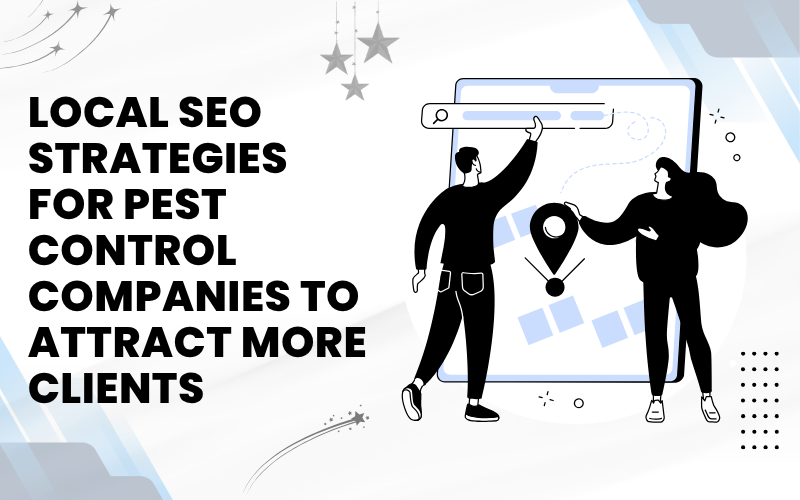
Local SEO focuses on optimizing your online presence so your pest control business appears in local search results, especially on Google. Since most pest control services are location-bound and time-sensitive, showing up in the top results can directly impact your lead generation and bookings.
Why Local SEO Matters for Pest Control Businesses
Over 46% of all Google searches are for local information sources, and more than 76% of people who search for a local service on their phone visit a business within a day, according to the source.
That’s the level of intent pest control companies need to capitalize on. If you’re not showing up in the local 3-pack or map listings, your competitors likely are.
Effective local SEO strategies for pest control companies don’t just improve rankings, they increase visibility where and when it matters most. This leads to more phone calls, website visits, and ultimately, more booked appointments.
Essential Local SEO Strategies for Pest Control Companies
1. Fully Optimize Your Google Business Profile
Your Google Business Profile (GBP) is one of the most powerful tools for local SEO. It influences how your business appears on Google Maps and in the local pack.
Start by ensuring that your NAP (Name, Address, Phone number) is correct and consistent with your website and other directories. Choose the right business categories, such as “Pest Control Service” and “Exterminator,” and add all relevant services you offer.
Upload high-quality, real photos of your work, team, and equipment. This builds trust and engagement with potential clients. Use the business description area to include your core services and locations served using local keywords.
Post weekly updates such as pest control tips, seasonal alerts, or promotional offers to show Google that your profile is active and well-maintained.
2. Ensure Consistent NAP Across All Platforms
NAP stands for Name, Address, and Phone Number – three key identifiers for your pest control business online. Ensuring that your NAP is consistent everywhere your business is mentioned online is critical for local SEO success. Search engines use this data to verify your legitimacy and determine how to rank your business in local results.
If your Google Business Profile lists one phone number but Yelp or Angi shows another, search engines might treat them as separate businesses, harming your visibility. Consistency should be maintained across:
- Your website
- Google Business Profile
- Online directories (Yelp, HomeAdvisor, Angi, etc.)
- Social media pages
- Any citations or business listings
Use formatting consistency too, don’t alternate between “Street” and “St.”, or use multiple versions of your business name. Tools like Moz Local, BrightLocal, or Whitespark can help identify and fix inconsistent NAP data at scale.
3. Build and Maintain Consistent Local Citations
Local citations are online mentions of your business on platforms like Yelp, Angi, HomeAdvisor, Thumbtack, and local directories. These listings help verify your business information and boost your credibility with search engines.
It’s critical that your NAP details are identical across all these platforms. Even small inconsistencies can confuse Google and negatively affect your rankings.
Building citations on authoritative platforms increases your chances of ranking higher in local search results and adds valuable backlinks to your site.
4. Generate and Manage Customer Reviews
Reviews are one of the top-ranking factors in local SEO. They influence both your map rankings and customer trust. Encourage every satisfied client to leave a Google review. You can automate this process with post-service emails or text messages linking directly to your review page.
Always respond to reviews, thank your happy customers, and professionally address any concerns raised in negative reviews. Frequent, positive reviews signal to Google that your business is active and valued in the community, which can help improve your local rankings.
5. Target Local Keywords Throughout Your Website
Targeting location-specific keywords is vital for appearing in local search results. Research and identify phrases your potential clients use, such as “termite treatment in [City]” or “pest control near [Neighborhood].”
Incorporate these keywords naturally into your:
- Page titles and meta descriptions
- H1 and H2 headers
- Main content paragraphs
- Alt text for images
Avoid keyword stuffing; your goal is to make the content useful and readable for humans while still optimized for search engines.
6. Create Individual Location and Service Pages
If your pest control business operates in multiple cities or neighborhoods, a single generic service page won’t cut it. Instead, create dedicated pages for each location you serve. For example, “Ant Control in Mississauga” and “Ant Control in Oakville” should be two distinct pages.
Each location page should include locally relevant content, such as the types of pests common in that area, customer testimonials from local clients, and geo-targeted keywords. Add structured data to these pages and avoid duplicating the same content across locations to prevent SEO penalties.
7. Implement Local Schema Markup
Schema markup is a form of structured data that helps search engines understand your website content more accurately. By adding LocalBusiness and Service schema, you provide search engines with information such as your business name, address, phone number, service areas, hours of operation, and customer reviews.
This data can be displayed as rich snippets in search results, enhancing your visibility and click-through rate. Tools like Merkle’s Schema Markup Generator or SEO plugins like Rank Math simplify the implementation process. Schema also helps your business stand out in voice searches and mobile results.
8. Build Local Backlinks
Local backlinks are links from other locally relevant websites pointing to your site. These can include local news outlets, blogs, business associations, or sponsorships. They send strong signals to Google that your business is part of the local community.
To build these backlinks:
- Sponsor a local event and get listed on the event’s website
- Write guest posts for local blogs or neighborhood forums
- Collaborate with complementary local businesses for cross-promotion
Each high-quality local backlink not only boosts your SEO but also builds brand awareness in your service area.
9. Make Contact Info Easily Accessible on Every Page
Your website should make it as easy as possible for customers to contact you. Every page, especially your homepage and service pages, should have a clickable phone number, complete address, and business hours. Place this information in the header, footer, or a floating call button for mobile users.
This is crucial for mobile visitors who are ready to call. It also helps Google verify your contact details across your site and aligns with your Google Business Profile information for consistency.
10. Optimize for “Near Me” and Voice Search Queries
Search behavior is evolving, especially with mobile and voice search. People now ask questions like “best pest control near me” or “who can get rid of rats in [City]?”
To capture these types of queries:
- Use natural, conversational phrases in your content
- Add questions as subheadings (H2/H3), such as “What’s the best pest control service near me?”
- Mention neighborhoods, districts, and local landmarks in your content where appropriate
Voice search optimization improves your chances of appearing in featured snippets and voice assistant results.
11. Create Local FAQ Content
Local FAQ sections help answer common customer questions while targeting long-tail keywords. Think about the typical questions clients ask before booking:
- “How much does pest control cost in [City]?”
- “Are your treatments safe for pets and kids?”
- “Do you handle seasonal pests like carpenter ants or wasps?”
Answering these questions on your service or location pages can improve user experience, reduce bounce rate, and boost your relevance in search results.
12. Use Google Posts and Enable Messaging
Google Posts allow you to publish timely updates that appear right in your Business Profile. You can promote seasonal services, limited-time offers, blog updates, or educational tips.
Additionally, enabling messaging lets users contact your business via chat directly from your profile. This reduces friction in the customer journey and increases conversions, especially among users who prefer messaging over calling.
13. Track and Adjust Your Strategy Based on Data
No SEO strategy is complete without performance tracking. Use Google Business Insights to track how many people are viewing your profile, requesting directions, or calling you. Google Search Console helps you understand how your website is performing in search.
Track the following metrics regularly:
- Local keyword rankings
- Clicks and calls from your GBP
- Website traffic by location
- Review volume and rating trends
Based on this data, continue optimizing your content, citations, and Google Business Profile. Local SEO is an ongoing process, and regular tuning ensures you stay ahead of the competition.
Local SEO Mistakes to Avoid
- Using a PO Box or virtual office address, which violates Google’s guidelines
- Inconsistent NAP across online listings, confusing search engines
- Ignoring reviews or failing to respond to negative feedback
- Publishing duplicate content across multiple location pages
- Overusing keywords unnaturally, leading to poor readability and penalties
Fixing these issues proactively protects your rankings and builds trust with both search engines and potential customers.
Final Thoughts
Effective local SEO strategies for pest control companies can transform your business by consistently attracting more high-intent local clients. From optimizing your Google Business Profile to creating location-specific pages and earning local backlinks, every action counts. Staying visible in your service area doesn’t just help your brand; it brings in steady, qualified leads ready to book.
If you want to grow your pest control business, now’s the time to build your local SEO foundation and stand out where it matters most.
Frequently Asked Questions (FAQs)
1. How long does it take to see results from local SEO?
Local SEO is not an overnight fix. While some improvements, like optimizing your Google Business Profile, can have a near-immediate effect, full results often take 3 to 6 months, depending on competition and effort.
2. What are the most important ranking factors for local SEO?
Key local SEO factors include Google Business Profile optimization, consistent NAP info, customer reviews, local backlinks, and on-page keyword targeting with localized content.
3. Can I do local SEO myself, or should I hire an expert?
You can manage many aspects of local SEO yourself, such as updating your Google profile or asking for reviews. However, tasks like schema markup, backlink building, and auditing your site for local keywords may be best handled by a professional.
4. Do I need separate pages for every city I service?
Yes, having individual, unique service pages for each city you operate in helps you rank locally in those areas. Be sure to customize the content for each location to avoid duplication penalties.
5. How do reviews impact my local SEO?
Reviews improve trust and help boost visibility in Google Maps and the local 3-pack. More positively, recent reviews indicate a healthy, active business to both Google and potential customers.
6. What’s the difference between local SEO and traditional SEO?
Local SEO focuses on ranking for geographically-specific searches and emphasizes your Google Business Profile, reviews, and local citations. Traditional SEO is more about national or global visibility.
7. How often should I update my Google Business Profile?
Update your profile regularly, ideally weekly, with posts, new photos, updated hours, and responses to reviews. An active profile signals to Google that your business is engaged and trustworthy.
8. Are online directories still relevant for local SEO?
Absolutely. Being listed consistently in online directories like Yelp, Angi, and local business sites boosts your credibility and helps Google verify your business details.